
Meeting The Owners At HML: Emile and Jeroen van de Starre
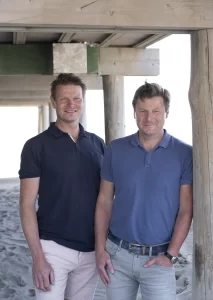
In the specialised world of maritime engineering, few systems require the combination of precision, safety, and design integration demanded by marine lifts. Emile van de Starre shared the company’s story, and we learned how the company has become a trusted supplier of superyacht lifts, naval lift systems, and offshore maritime elevators. After two years, Emile’s brother Jeroen bought shares, and both have been running the company successfully ever since.
For more than two decades, Holland Marine Lifts has designed and delivered custom lift systems for vessels around the world. Emile offers a unique perspective on how marine lift engineering works behind the scenes, from concept and design to installation, maintenance, and long-term upgrades.
The Story Behind Holland Marine Lifts
HML was founded in October 2002 when Emile van de Starre recognised the opportunity to preserve specialist knowledge within the maritime sector.
His father had spent his career designing complex lifts for ships. When the company he worked for decided to stop offering these services, valuable engineering expertise risked disappearing from the industry. Rather than letting that knowledge be lost, Emile launched Holland Marine Lifts himself, with his father providing technical support.
The company’s first project arrived almost immediately through Dutch shipbuilding connections. A large contract with a shipbuilder secured several years of work, allowing HML to establish itself within the maritime supply chain.
During that period, the company began building relationships with shipyards involved in superyacht construction. Over time, HML expanded into the superyacht lift market, where highly customised elevator systems must combine technical reliability with luxury design.
Today, more than 20 years later, HML has installed around 450 marine lifts worldwide, supporting vessels across the superyacht, offshore, and naval sectors.
A Specialist Company Built on Engineering Expertise
One of the defining characteristics of HML is the deliberate decision to remain a specialist engineering company rather than scaling rapidly, with the focus on quality rather than quantity.
The business now employs just over twenty specialists, including designers, engineers, electrical technicians, and installation teams. This smaller structure allows HML to remain closely involved with each project and collaborate directly with shipyards throughout the design and construction process.
For complex systems like yacht elevator systems, early collaboration is essential. Lifts must be integrated into a vessel’s structure during the design stage, long before the vessel itself is completed.
Maintaining a focused team ensures that every project benefits from the company’s accumulated experience in maritime lift engineering.
The Process of Engineering a Marine Lift
A marine lift project typically begins with a general arrangement drawing from the shipyard showing the available shaft space and deck layout.
From the initial arrangement drawings provided by the shipyards, engineers at HML assess the available space within the vessel and begin developing the lift concept. This early stage determines how the lift system can be integrated into the ship’s structure while meeting the operational requirements of the project.
Once the concept design is agreed upon, the engineering team develops a detailed 3D model of the lift system to ensure it can be fully integrated into the vessel’s layout before production begins.
Manufacturing is then carried out through a network of trusted suppliers located near the HML facility. Components are produced and delivered to the workshop, where the lift system is assembled before being transported to the shipyard for installation.
Timing plays an important role during this phase. Certain lift components must be installed before sections of the vessel’s structure are closed during construction, meaning careful coordination with the shipyard is essential.
Looking Ahead: Innovation in Superyacht Lift Technology
Although the lift industry tends to evolve slowly due to strict safety standards, HML continues to explore new technologies for the superyacht sector.
One example is the development of wireless lift car systems, where signals from push buttons and control panels are transmitted without traditional trailing cables. This reduces noise and improves aesthetics in glass lift installations.
The company is also exploring immersive lift experiences where video systems transform the interior environment of the lift during travel between decks. While these innovations remain niche for now, they demonstrate how marine lift engineering continues to adapt to the expectations of modern yacht owners.
A Personal Perspective on Running HML
For Emile van de Starre, the most rewarding moments are not tied to a single project but to the ongoing trust placed in the company by shipyards and clients.
Each new order represents confidence in the team’s engineering capabilities. Every completed installation, when a vessel leaves the yard with its lift fully operational, is another milestone for the designers, technicians, and engineers involved.
More than twenty years after its founding, HML continues to operate with the same mission it started with: delivering the highest quality marine lift for yachting, naval, and offshore vessels. The company’s continued success is built on a close-knit team where each individual brings technical expertise, loyalty, and trust to every project. This ensures that the same commitment to precision and reliability defines every lift system delivered by Holland Marine Lifts.
Contact HML to find out more about their maritime lift expertise