
Marine Lift Engineering Challenges in Harsh Environments
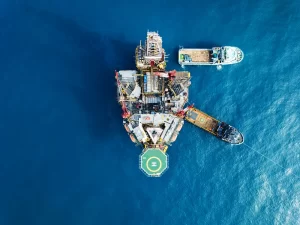
Designing and delivering marine lifts is a highly specialised discipline, one that sits at the intersection of mechanical engineering, naval architecture, and safety-critical system design. In harsh maritime environments, where vessels are constantly exposed to motion, moisture, temperature extremes, and strict regulatory frameworks, lift engineering becomes significantly more complex than its land-based counterpart.
We will explore the key engineering challenges faced when designing marine lifts for superyachts, offshore vessels, and naval ships, and how we overcome these challenges.
Constant Motion: Designing for a Moving Structure
Unlike lifts in buildings, marine lifts must operate on a structure that is never static. Ships are continuously subject to rolling and pitching motions caused by waves and sea conditions. This creates dynamic forces that directly impact lift systems.
Engineers must account for these forces during the design phase, calculating how movement affects:
- Load distribution
- Guide rail alignments
- Structural integrity
Even slight miscalculations can lead to long-term wear or operational inefficiencies. As a result, marine lift engineering requires precise force modelling to ensure consistent and safe performance under all sea conditions.
Check out our custom marine lifts designed for harsh environments
Space Constraints: Engineering Within Tight Limits
Space is one of the most persistent challenges across all vessel types. Whether on a luxury superyacht or a naval vessel, available space is often limited both vertically and horizontally.
Key constraints include:
- Limited shaft dimensions
- Restricted pit depth or overhead clearance
- Structural elements like stiffeners and insulation reducing usable space
These limitations force engineers to optimise every millimetre. Early-stage collaboration with shipyards is critical, as even minor oversights, such as unaccounted insulation thickness, can significantly impact the feasibility of a lift design.
Safety Regulations and Fire Protection
Marine lifts must comply with stringent international safety regulations, particularly those related to fire protection and passenger safety.
Fire safety considerations include:
- Use of certified fire-rated doors (e.g. A0 or A60 classifications)
- Fire boundary compliance across multiple decks
- Non-flammable and low-toxicity materials, including halogen-free cabling
If a fire spreads through a lift shaft, it can rapidly affect multiple decks. Therefore, containment through proper materials and certified components is essential.
Marine lift systems are also programmed with emergency protocols designed to maintain passenger safety during critical situations. In fire scenarios, lifts can automatically travel to a designated safe deck, while backup power systems such as UPS units enable controlled descent and safe door opening during power failures.
Extreme Environmental Conditions
Marine lifts often operate in environments that would be considered extreme by land-based standards. Offshore and naval vessels, in particular, may face:
- Sub-zero temperatures (down to -20°C or lower)
- Saltwater exposure and high humidity
- Rain and direct seawater ingress for deck-penetrating lifts
Material Selection
Material choice is critical in these environments. Engineers must select:
- Low-temperature-rated steels to prevent brittleness
- Corrosion-resistant materials such as stainless steel 316
- Durable coatings and paint systems with verified thickness and application quality
Sharp edges are avoided in fabrication to ensure proper coating adhesion, reducing the risk of corrosion over time.
Book your annual lift inspection to check the condition of your marine lift
Corrosion and Moisture Management
For lifts exposed to external elements, such as those that travel through open decks, corrosion is a constant threat.
Preventative measures include:
- Protective coatings and marine-grade paint systems
- Regular greasing of moving components like guide rails
- Automated lubrication systems that apply grease during operation
Additionally, while lift systems themselves do not manage drainage, they must integrate with vessel-level solutions such as bilge systems to handle water accumulation in lift pits.
Electrical Challenges: EMC and Explosion-Proof Design
In offshore and naval environments, lifts may need to meet advanced electrical safety requirements, including:
- EMC (Electromagnetic Compatibility): Ensuring lift systems do not interfere with sensitive onboard electronics
- Explosion-proof components: Required in areas where fuel or hazardous gases may be present, such as near helicopter refuelling zones
These requirements significantly influence component selection, system design, and certification processes.
Noise and Vibration Reduction
Noise and vibration are particularly critical in the superyacht sector, where guest comfort is paramount.
Innovations to address this include:
- Vibration monitoring systems to detect wear over time
- Improved drive systems with reduced operational noise
- Wireless lift technology to eliminate moving cable noise
Traditional cable systems can swing and create noise, or even fail if caught on components. Wireless systems using secure signal transmission and onboard battery power eliminate this issue, offering both aesthetic and acoustic benefits.
Find out more about our previous marine lift projects
Maintenance Challenges and Lifecycle Considerations
Marine lifts are built for longevity, often operating for 20 years or more with proper maintenance. However, harsh conditions accelerate wear on key components.
Common maintenance issues include:
- Door misalignment or contamination (the most frequent cause of faults)
- Wear on steel ropes and guide shoes
- Insufficient lubrication leading to friction and noise
Preventative maintenance is essential. Regular cleaning, inspection, and component replacement (e.g. seals, controllers, ropes) ensure continued safe operation.
Balancing Aesthetics and Engineering in Superyachts
In the superyacht sector, engineering challenges are often compounded by ambitious design expectations. Clients may envision visually striking features, such as glass lifts or artistic interiors, that must be integrated without compromising safety or functionality.
This requires:
- Custom classing (e.g. polished steel, bronze finishes)
- Integration of artwork and bespoke materials
- Careful concealment of technical components
Engineers must bridge the gap between concept and reality, translating aesthetic visions into technically viable solutions.
Complex Approval and Testing Processes
Marine lift systems undergo rigorous approval and testing procedures, especially in offshore and naval applications.
Key steps include:
- Design appraisal by classification societies (e.g. Lloyd’s Register, DNV, ABS)
- Detailed documentation of materials, calculations, and welding processes
- Harbour Acceptance Testing (HAT), including
- Load testing (up to 125% capacity)
- Safety system verification
- Hydraulic pressure testing
- Electrical system checks
Approval processes alone can take anywhere from 10 weeks to 5 months, making early planning essential.
Marine lift engineering in harsh environments is a complex, multidisciplinary challenge. From constant vessel motion and extreme weather conditions to strict regulations and tight spatial constraints, every project demands a tailored, highly engineered solution.
Success in this field relies on:
- Deep technical expertise
- Close collaboration with shipyards and clients
- A strong focus on safety, reliability, and long-term performance
As vessels continue to evolve, particularly in the luxury and offshore sectors, marine lift systems must adapt accordingly, balancing innovation with the uncompromising demands of the maritime environment.
Contact HML for expert marine lift challenges