
How Marine Lift Smart Controls Improve Performance
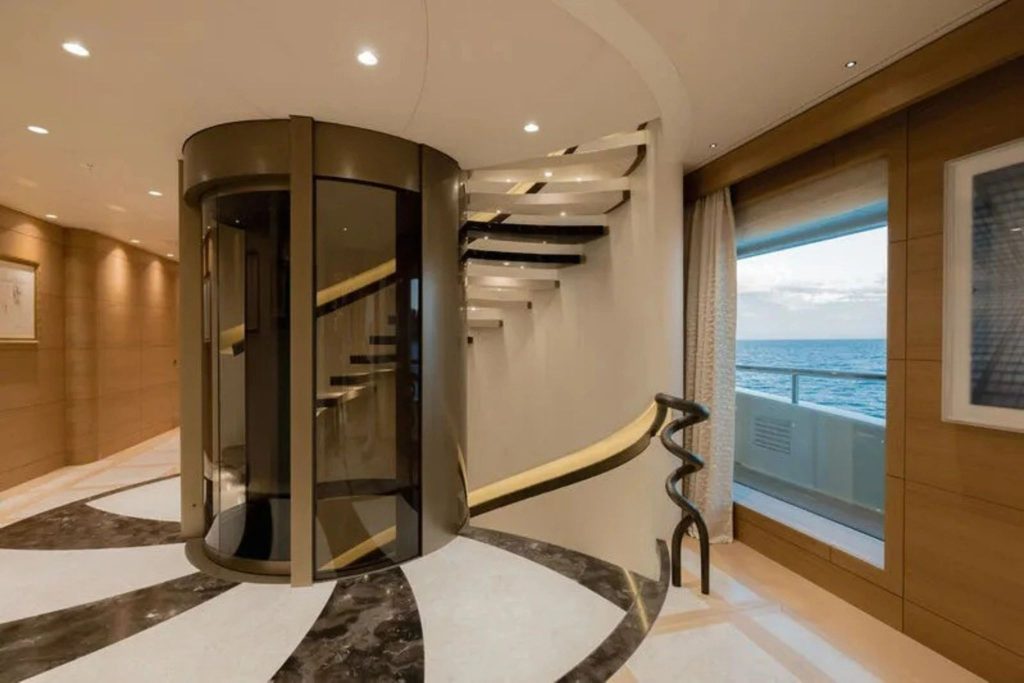
Every year at the Monaco Yacht Show, we speak with yacht builders, designers, and project managers about the future of marine engineering. While many conversations naturally focus on beautiful interiors and innovative design, one area continues to evolve quietly behind the scenes: marine lift technology.
At HML, we’ve spent more than 20 years designing passenger lifts, hydraulic cargo lift systems, and specialist lift solutions for superyachts, offshore vessels and naval ships. During that time, we’ve seen technology become smarter, more compact, and more connected, but we’ve also learned that innovation only matters if it improves safety, reliability, and the onboard experience.
Rather than chasing technology for its own sake, we focus on solutions that genuinely benefit vessel owners, shipyards, and crew.
Smart Controls Are Transforming Marine Lift Performance
Today’s lift controllers are significantly more capable than those we installed twenty years ago.
Modern controllers continuously monitor the operation of a lift, recording everything from door movements to operating faults. If required by the owners, these systems can also be accessed remotely, allowing engineers to review fault histories and diagnose issues before travelling to the vessel.
Although many yacht owners still prefer direct communication with our engineers rather than continuous remote monitoring, these intelligent systems provide valuable information whenever technical support is required.
The biggest change isn’t necessarily that lifts have become ‘smarter’; it’s that the technology has become smaller, lighter, and more efficient, making it easier to integrate sophisticated control systems into luxury yachts without compromising valuable onboard space.
Preventative Maintenance Starts With Better Data
One of the biggest advantages of intelligent lift control systems is their ability to support preventative maintenance. On some commercial, offshore, and naval projects, vibration monitoring sensors can detect subtle changes within the drive system. As components begin to wear, vibration levels increase, providing an early indication that maintenance may soon be required.
Rather than waiting for a component to fail, engineers can schedule maintenance before it affects lift performance. While this type of predictive monitoring isn’t yet common across every superyacht, it demonstrates how technology is helping to improve reliability while supporting more efficient annual lift maintenance programmes.
Combined with regular servicing and annual lift inspection, these technologies help extend lift lifespan and reduce unexpected downtime.
Check out HML’s portfolio of marine lift projects
Safety Remains the Foundation of Every Marine Lift
No matter how advanced technology becomes, safety will always come first.
Every marine lift project we undertake begins with the same priority: creating the safest possible lift for its operating environment. Marine lifts operate in constantly changing conditions. Unlike buildings, vessels roll, pitch and flex, meaning every lift must be engineered to accommodate movement while maintaining safe operation.
Our control systems monitor critical safety functions including:
- Door locking systems
- End limit switches
- Emergency operating modes
- Load monitoring
- System fault detection
Every safety function is thoroughly tested before delivery.
Whether we’re designing a luxury passenger lift or a hydraulic cargo lift, safety is never an optional extra; it forms the foundation of every design decision.
Smart Emergency Functions Protect Crew and Guests
One area where modern controllers have made significant improvements is emergency operation. If a vessel experiences a power failure, many of our lifts incorporate an Uninterruptible Power Supply (UPS). Instead of passengers becoming trapped inside the lift, the system automatically lowers the lift safely to the nearest deck before opening the doors.
The lift controller can also be programmed to respond automatically to emergency signals, such as a fire alarm, directing the lift to a designated deck and opening the doors according to the vessel’s safety requirements.
These programmable responses help integrate the lift into the vessel’s wider safety systems while supporting compliance with marine safety requirements.
Advanced Engineering Goes Beyond Electronics
While control systems continue to evolve, marine lift engineering remains rooted in proven mechanical design. The lift industry is naturally conservative because every component must comply with strict safety regulations. Many of the core engineering principles have remained consistent for decades.
Where innovation has become more noticeable is in the details.
For example, we’ve developed a wireless communication system for certain glass lifts used on superyachts. Traditionally, passenger lifts require travelling electrical cables connecting the lift car to the controller. These cables can create unwanted movement and additional operational noise. By replacing much of this wiring with secure wireless communications and battery-powered onboard systems, we’ve created quieter lift operation while also removing visible cabling, an important advantage for premium glass lift installations where aesthetics are just as important as performance.
Discover our range of lift products
Engineering for Luxury Without Compromising Reliability
Designing lifts for superyachts is very different from designing lifts for offshore or naval vessels. Luxury yachts place enormous emphasis on aesthetics, limited installation space and exceptionally low noise levels.
At the same time, the lift must remain a highly reliable piece of engineering. This means every decorative finish, from polished stainless steel to bronze interiors or bespoke artwork, must be carefully integrated without compromising functionality or safety.
Smart controls support this balance by allowing sophisticated operation while keeping hardware compact enough to fit within increasingly challenging design spaces.
Why Regular Lift Inspection Still Matters
Even with intelligent monitoring, technology can never replace professional servicing.
One of the most common issues we encounter during a passenger lift inspection isn’t electronic failure at all; it’s simply poor maintenance. Door mechanisms that haven’t been cleaned or aligned correctly remain one of the biggest causes of operational issues.
Routine servicing helps identify wear on components such as:
- Steel ropes
- Guide shoes
- Hydraulic seals
- Controllers
- Door systems
With proper servicing and annual lift inspections, a well-maintained marine lift can continue operating reliably for twenty years or more. For many older installations, replacing ageing controllers while maintaining the original lift structure provides an excellent way to modernise performance without replacing the complete system.
See what is included in our annual marine lift inspections
Meeting Offshore Standards Without Losing Sight of Innovation
Whether we’re designing lifts for yachts, offshore vessels or naval ships, every project must satisfy demanding offshore standards and marine regulations. Many projects require independent approval from classification societies before manufacturing can even begin. This rigorous process ensures every design, material selection, and engineering calculation meets the required safety standards before production starts.
Innovation must always work within these regulations, not around them.
That philosophy has guided HML since we started designing marine lifts more than twenty years ago.
Visit Holland Marine Lifts at Monaco
As we prepare for this year’s Monaco Yacht Show, we’re looking forward to discussing the latest developments in marine lift engineering with shipyards, designers, and yacht professionals from around the world.
From intelligent control systems and quieter passenger lifts to advanced crew lift systems and long-term maintenance strategies, we’ll be sharing how proven engineering continues to evolve to meet the demands of modern vessels.
Because while all technology will continue to advance, our goal remains the same as it always has been:
To design and build the very best marine lifts available for the yachting, offshore, and naval industries.
Contact HML to book to see us at the yacht shows